You Are Here: Home > NEWS > Oil Purifier Technology
Writer: Kaiqian Oil Purifier Release time:2026-10-19 09:31 Clicks:
When an oil purifier has completed filtration but the treated oil still looks cloudy, the problem is not always caused by machine failure. Cloudiness can come from moisture, emulsification, very fine particles, oxidation products, incompatible additives, or an operating condition that prevents the purifier from working effectively. For maintenance teams, the key is to identify what is making the oil turbid before repeating filtration blindly.
Industrial oil purification systems are designed to remove harmful contaminants such as free water, dissolved water, gases and solid particles. However, different oils and contamination conditions require different treatment methods. Transformer oil, hydraulic oil, turbine oil, lubricating oil and diesel fuel do not behave in the same way during filtration. Understanding the reason behind cloudy oil helps operators choose the right process and avoid unnecessary downtime.
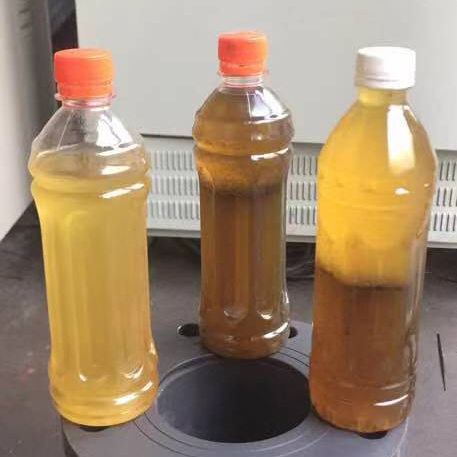
Water is one of the most common causes of cloudy oil. If water exists as free water, it can usually be separated more easily. If it is emulsified into tiny droplets, the oil may appear milky or hazy even after passing through ordinary filter elements.
Emulsified water is often found in hydraulic systems, turbine oil systems, lubricating oil tanks and equipment exposed to condensation, cooling water leakage or humid operating environments. In this condition, simple mechanical filtration may not be enough. A vacuum oil purifier or an oil water separation system is usually more suitable because it can remove moisture more effectively through heating, vacuum dehydration and circulation treatment.
Some contaminants are too small to be captured by the installed filter element. Even after filtration, suspended particles may continue to scatter light and make the oil look unclear. This is common when the oil contains metal wear particles, carbon residue, dust, sludge or degraded additive products.
If the selected filter precision is too coarse, the oil may look almost unchanged after treatment. In this case, the filter element rating should be reviewed according to the oil type, equipment requirements and cleanliness target. For sensitive hydraulic systems, turbines or insulating oil applications, particle control is especially important.
Oil that has been in service for a long time may contain oxidation products, varnish precursors, sludge and acidic compounds. These substances are not always removed by standard filtration. The oil may remain dark, hazy or sticky even after water and particles are reduced.
Filtration improves cleanliness, but it cannot fully restore oil that has seriously deteriorated chemically. If the oil shows high acidity, strong odor, obvious sludge or abnormal color change, laboratory testing is recommended. Depending on the result, the oil may need deeper purification, regeneration treatment, partial replacement or complete replacement.
Temperature affects oil viscosity, water separation and filtration efficiency. If the oil is too cold, its viscosity increases, contaminants may not separate well, and water droplets may remain suspended. If the temperature is too high, sensitive oil additives may be affected, and some oils may oxidize faster.
A properly designed oil purifier heating system helps reduce viscosity and improves dehydration, degassing and filtration performance. Operators should follow the recommended temperature range for the oil type rather than simply raising the temperature as much as possible.
A clogged or saturated filter element cannot maintain stable filtration performance. If the pressure difference rises quickly, flow decreases or the treated oil quality becomes unstable, the filter element should be inspected. Incorrect installation, damaged seals or bypass leakage may also allow unfiltered oil to pass through the system.
During troubleshooting, check whether the filter element is compatible with the oil, whether the sealing surface is clean, and whether the element has reached its replacement limit. Using poor-quality or unsuitable filter elements can also lead to unsatisfactory filtration results.
Different oil problems require different purification processes. A particle filtration machine may not solve heavy water contamination. A simple oil water separator may not remove dissolved gases from transformer oil. A vacuum oil purifier may be effective for dehydration and degassing, but oil with severe oxidation may still need regeneration or replacement.
Before selecting equipment, it is important to confirm the main treatment target: water removal, particle removal, gas removal, sludge reduction, acidity improvement or fuel clarification. The oil purifier should be matched to both the oil type and the contamination condition.
⚫️Check water content: Determine whether the cloudiness is caused by free water, emulsified water or dissolved moisture.
⚫️Inspect filter elements: Confirm filtration accuracy, service condition, sealing and installation direction.
⚫️Review operating temperature: Make sure the oil is treated within a suitable temperature range for its viscosity and application.
⚫️Observe pressure and flow: Abnormal pressure difference or unstable flow may indicate blockage, bypassing or pump problems.
⚫️Test oil quality: For critical equipment, test moisture, particle count, acidity, breakdown voltage, viscosity and appearance.
⚫️Evaluate oil aging: If oxidation or sludge is serious, ordinary filtration may not be enough.
⚫️Increase circulation time if necessary: Heavily contaminated oil may require multiple passes through the purifier.

| Oil Appearance | Possible Cause | Suggested Action |
Milky or white cloudy oil | Emulsified water or high moisture content | Use vacuum dehydration or oil water separation; check for water leakage source |
Dark and hazy oil | Oxidation, sludge or aged oil | Arrange oil testing; consider regeneration or replacement depending on condition |
Oil with visible floating particles | Solid contamination or filter precision too coarse | Replace or upgrade filter element; clean tank and circulation lines |
Clear at high temperature but cloudy when cooled | Moisture, wax-like deposits or additive precipitation | Check oil compatibility and water content; avoid mixing different oils without evaluation |
Cloudy oil after short operation time | Contaminants remain in the system, not only in the oil tank | Flush pipelines and equipment; repeat circulation filtration |
To improve oil clarity and treatment performance, operators should not only focus on the oil purifier itself. The entire oil system, including the tank, pipelines, pumps, valves and working environment, may contribute to repeated contamination.
⚫️Drain free water and sludge from the bottom of the tank before purification when possible.
⚫️Pre-filter heavily contaminated oil to protect fine filter elements and extend service life.
⚫️Maintain proper heating and vacuum conditions for dehydration and degassing applications.
⚫️Replace saturated filter elements in time instead of continuing operation with high pressure difference.
⚫️Prevent treated oil from contacting dirty containers, wet hoses or contaminated storage tanks.
⚫️For transformer oil, verify breakdown voltage and moisture content instead of relying only on visual appearance.
⚫️For hydraulic and lubricating oil, check the machine system for wear, coolant leakage or seal failure.
If the oil remains cloudy after repeated circulation, testing is safer than continuing treatment without direction. This is especially important for transformer oil, turbine oil, hydraulic oil used in precision systems, and lubricating oil in heavy-duty machinery. Visual inspection can reveal obvious problems, but it cannot accurately judge moisture level, particle cleanliness, acidity, gas content or insulation performance.
Oil analysis helps determine whether the purifier settings need adjustment, whether the oil is still serviceable, or whether the contamination source must be repaired first. For example, if new water keeps entering the tank through a cooler leak, filtration alone will not solve the problem. If the oil has chemically deteriorated, a different treatment plan may be required.
For oil that remains cloudy after ordinary filtration, equipment selection should be based on the actual contamination type. A vacuum oil purifier is commonly used for transformer oil, turbine oil, hydraulic oil and lubricating oil where dehydration and degassing are required. A diesel fuel purifier may focus more on water separation and fine particle removal. For waste oil with severe aging or mixed contaminants, a more comprehensive recycling or distillation process may be considered after evaluation.
When choosing an oil purification system, pay attention to oil type, viscosity, water content, particle size, required cleanliness level, operating flow rate, heating method and maintenance convenience. A well-matched machine can reduce repeated filtration work and help restore oil quality more efficiently.
Cloudy oil after oil purifier filtration usually means that the cause of turbidity has not been fully removed. The issue may come from emulsified water, fine particles, aged oil, unsuitable temperature, saturated filters or incorrect equipment selection. A practical troubleshooting approach is to test the oil, inspect the purifier, confirm operating conditions and eliminate the contamination source. With the right treatment method, industrial oil purification can improve oil cleanliness, support equipment reliability and reduce unnecessary oil replacement.
Address:No.66 Kecheng Road,Jiulongpo District, Chongqing, China
Phone:0086 13983031725
Whatsapp:0086 13983031725
Email:oilpurification@kaiqiancq.com