You Are Here: Home > NEWS > Oil Purifier Technology
Writer: Kaiqian Oil Purifier Release time:2026-10-08 15:10 Clicks:
Oil oxidation is one of the main reasons industrial oil becomes dark, acidic, viscous and less effective. Whether the oil is used in transformers, hydraulic systems, turbines, lubrication equipment or fuel storage, oxidation gradually changes its chemical properties and reduces its service performance. An oil purifier cannot completely stop oxidation, because oxidation is a natural reaction between oil and oxygen under heat and operating stress. However, a properly selected oil purification system can slow the oxidation process and help keep the oil in a more stable condition for longer use.
In practical oil maintenance, oxidation control is not handled by a single function. It depends on removing the substances that accelerate aging: water, dissolved gases, oxygen, solid particles, sludge and acidic by-products. This is why vacuum oil purifiers, fine filtration systems and dehydration equipment are widely used in power plants, substations, machinery workshops, steel mills, mining sites and marine applications.
Oil oxidation occurs when oil molecules react with oxygen. The reaction becomes faster when oil is exposed to high temperature, moisture, metal particles, air ingress or long service cycles. During oxidation, the oil may generate acids, sludge, varnish and other degradation products. These substances can block filters, damage valves, reduce insulation strength, increase wear and affect heat transfer.
Common factors that accelerate oil oxidation include:
Moisture contamination: Water promotes chemical reactions and reduces the dielectric or lubricating performance of oil.
Dissolved air and oxygen: Oxygen is directly involved in oxidation reactions, especially under heat and pressure.
Fine particles and metal wear debris: Contaminants can act as catalysts and speed up oil aging.
High operating temperature: Heat increases oxidation rate and may also lead to thermal degradation.
Sludge and acidic compounds: Existing degradation products continue to affect oil quality if they are not removed in time.
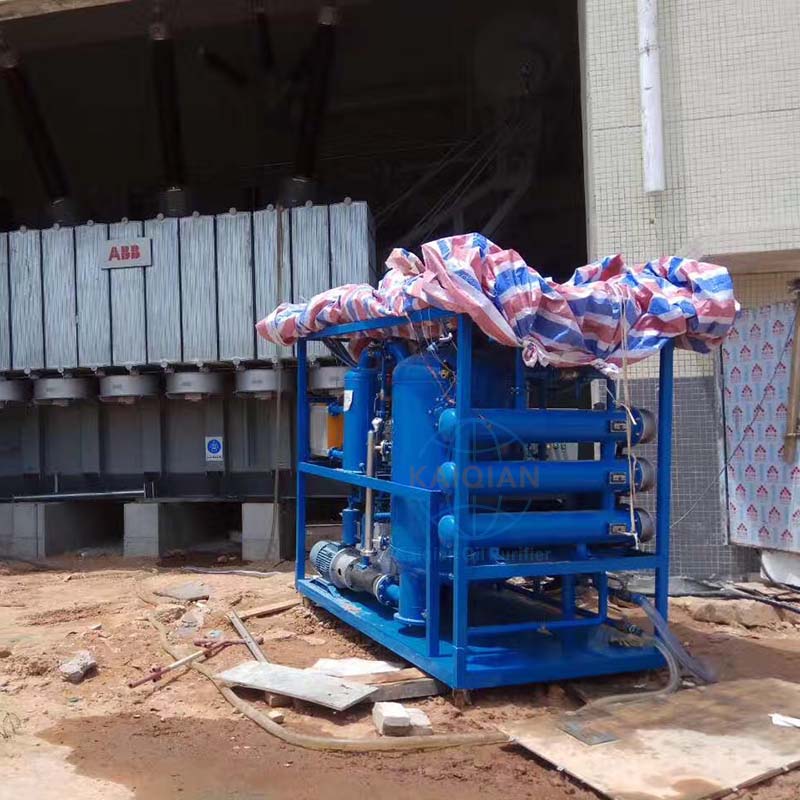
Water is one of the most harmful contaminants in transformer oil, turbine oil, hydraulic oil and lubricating oil. Even a small amount of dissolved moisture can reduce oil stability and promote oxidation. In a vacuum oil purifier, the oil is heated to a controlled temperature and enters a vacuum chamber. Under vacuum conditions, water evaporates at a lower temperature and is discharged from the system.
By reducing water content, the purifier helps prevent acid formation, sludge generation, corrosion and insulation deterioration. For transformer oil, moisture removal is especially important because water directly affects dielectric strength and long-term insulation reliability.
Oxygen is a direct participant in oxidation. Vacuum degassing helps remove dissolved air and gases from the oil, including oxygen and other volatile gases. When oil passes through the vacuum separation chamber in a thin film or dispersed state, the contact area increases and gases are released more efficiently.
For transformer oil purification, degassing improves insulation performance and reduces the risk of gas-related defects. For lubricating and hydraulic oils, reducing entrained air also helps improve system response, lubrication stability and foam control.
Solid particles are not only a mechanical contamination problem. Fine metal particles, dust, carbon residue and degraded sludge can accelerate oxidation and wear. An industrial oil purifier normally uses multi-stage filtration to capture particles of different sizes. Coarse filtration protects the system, while fine filtration improves oil cleanliness before the oil returns to the equipment or storage tank.
Cleaner oil reduces abrasive wear and lowers the chance of oxidation products accumulating inside pumps, bearings, valves, windings and pipelines.
As oil ages, oxidation products can form sludge, varnish and acidic compounds. Standard filtration can remove part of the suspended sludge and insoluble impurities. In some oil treatment applications, additional processes such as adsorption, regeneration or distillation may be used depending on oil type and contamination level.
For heavily aged oil, a purifier can improve oil condition, but it may not fully restore oil chemistry. Oil testing is recommended before deciding whether to filter, regenerate or replace the oil.
The heating system in an oil purifier supports dehydration and degassing by reducing oil viscosity and improving separation efficiency. However, excessive or uneven heating may increase thermal stress and accelerate oil degradation. A well-designed oil purification machine uses controlled heating to keep the oil within a suitable processing temperature range.
This is important for sensitive oils such as transformer oil, turbine oil and high-grade lubricants. Stable temperature control helps remove moisture and gases without exposing the oil to avoidable overheating.
| Purifier Function | Effect on Oil Oxidation | Typical Applications |
|---|---|---|
| Vacuum dehydration | Removes water that promotes acid formation and oil aging | Transformer oil, turbine oil, hydraulic oil, lube oil |
| Vacuum degassing | Reduces dissolved air and oxygen involved in oxidation | Insulating oil, lubricating oil, high-performance hydraulic systems |
| Fine particle filtration | Removes contaminants and wear debris that accelerate degradation | Industrial lubrication, hydraulic systems, power equipment |
| Sludge reduction | Helps remove insoluble oxidation products and deposits | Aged lubricating oil, turbine oil, hydraulic oil |
| Temperature control | Improves treatment efficiency while avoiding excessive heating | Vacuum oil purifier and high-viscosity oil filtration systems |
Not all oils are treated in the same way. The correct oil purifier configuration depends on oil type, viscosity, water content, gas content, particle contamination and equipment operating conditions.
Transformer oil requires strong dehydration, degassing and fine filtration. Oxidation control is closely related to moisture removal, oxygen reduction and maintaining dielectric strength. Vacuum transformer oil purification is commonly used during installation, maintenance and oil circulation treatment.
Lubricating oil oxidation often appears as viscosity increase, dark color, sludge and acid growth. A lube oil purifier can remove water and particles, helping protect bearings, gears and circulating lubrication systems. If the oil is severely oxidized, laboratory analysis should be used to determine whether purification is sufficient.
Hydraulic oil is sensitive to water, particles and air. Oxidation can cause varnish, valve sticking and unstable system operation. Hydraulic oil filtration and dehydration help maintain cleanliness and reduce degradation risk.
Turbine oil usually operates for long cycles and is exposed to water ingress, high temperature and air contact. Vacuum dehydration and fine filtration are important for maintaining demulsibility, cleanliness and oxidation stability.
Fuel oil oxidation may cause gum, sediments and storage instability. Diesel fuel purifiers mainly focus on water separation and particle removal, which helps improve fuel cleanliness and reduce downstream equipment problems.
When selecting an oil purifier, the goal should not only be basic filtration. For oxidation prevention, the machine should be matched to the actual contamination source and oil condition.
Check the oil type: Transformer oil, hydraulic oil, turbine oil, lubricating oil and diesel fuel need different treatment processes.
Confirm water condition: Free water, emulsified water and dissolved water require different separation capabilities.
Consider degassing demand: For insulating oil and systems affected by air entrainment, vacuum degassing is important.
Select suitable filtration accuracy: Fine filtration should meet the cleanliness requirements of the equipment, but overly restrictive filters may reduce flow efficiency.
Pay attention to heating design: Stable and controlled heating supports efficient purification and helps avoid thermal degradation.
Use oil testing as a guide: Moisture, acidity, breakdown voltage, particle count, viscosity and oxidation indicators can help decide the correct treatment plan.
An oil purifier can remove many contaminants that cause or accelerate oxidation, but it cannot always reverse chemical aging. If the oil has already developed high acidity, severe sludge, abnormal viscosity or depleted additives, simple filtration may not be enough. In such cases, oil regeneration, adsorption treatment, distillation or oil replacement may be considered according to the oil type and test results.
For oil that is still serviceable, regular purification is a practical way to slow further degradation. Preventive treatment is usually more effective than waiting until the oil is seriously aged.
Keep oil storage tanks and equipment sealed as much as possible to reduce air and moisture ingress.
Remove water promptly after maintenance, leakage or long shutdown periods.
Use proper filtration during oil filling, transfer and circulation.
Avoid unnecessary overheating during equipment operation and oil treatment.
Monitor oil quality regularly instead of relying only on color changes.
Replace filter elements on schedule to maintain purifier performance.
Choose vacuum oil purification when moisture and dissolved gases are key problems.
An oil purifier helps prevent oil oxidation by removing the main factors that accelerate oil aging: water, oxygen, dissolved gases, particles and sludge. Through vacuum dehydration, degassing, fine filtration and controlled heating, the purifier supports stable oil performance and helps protect transformers, hydraulic systems, turbines, lubrication systems and other industrial equipment.
For best results, the oil purifier should be selected according to oil type, contamination level and maintenance target. Combined with regular oil testing and correct operating practices, oil purification is an effective method for extending oil service life and reducing equipment maintenance risks.
Address:No.66 Kecheng Road,Jiulongpo District, Chongqing, China
Phone:0086 13983031725
Whatsapp:0086 13983031725
Email:oilpurification@kaiqiancq.com