You Are Here: Home > NEWS > Oil Purifier Technology
Writer: Kaiqian Oil Purifier Release time:2026-11-10 14:18 Clicks:
Diesel filtration equipment can remove some gum, but it cannot remove all gum-related contaminants. If the gum is present as suspended, insoluble particles or sticky deposits captured by a filter element, filtration may reduce it. If the gum is dissolved in the diesel or formed by fuel oxidation, ordinary filtration will not restore the fuel to its original chemical condition.
Diesel fuel may contain insoluble gum, sediment, sludge and oxidation deposits. These contaminants can remain suspended in the fuel or accumulate on tank bottoms and equipment surfaces. A suitable diesel filter machine can separate part of this solid material according to the filter rating and the condition of the fuel.
Filtration is less effective when the gum is soluble, extremely fine, or mixed with water and oxidation products. In these cases, the fuel may look clearer after filtering while still containing dissolved degradation products. Clear color alone does not prove that the diesel meets its required quality standard.
Filter elements mainly provide physical separation. They remove particles larger than the effective filtration rating, but they do not normally break down dissolved gum molecules or reverse fuel oxidation. A fine filter may also clog quickly when the diesel contains a high concentration of sticky deposits.
Excessive filter blockage can reduce flow, increase pressure drop and overload the pump. It may also cause an operator to replace filter elements repeatedly without solving the underlying problem. The treatment method should therefore be selected according to the form and source of the gum.
Check the appearance: Sediment, visible sludge or suspended particles suggest that pre-filtration may be useful, although visual inspection is not enough for final quality assessment.
Inspect the filter residue: A sticky, dark deposit on the element indicates that the equipment is capturing insoluble contamination. Rapid blockage may indicate severe fuel aging or tank contamination.
Test the fuel: If possible, check water content, sediment, particulate contamination, oxidation stability and gum-related indicators before and after treatment.
Identify the source: Poor storage conditions, air exposure, high temperature, water contamination and long storage periods can accelerate diesel oxidation and deposit formation.
If the main problem is free water, a diesel purification system with water separation or vacuum dehydration may be more appropriate than a filter alone. Water removal and particle filtration are different functions and should not be treated as the same process.
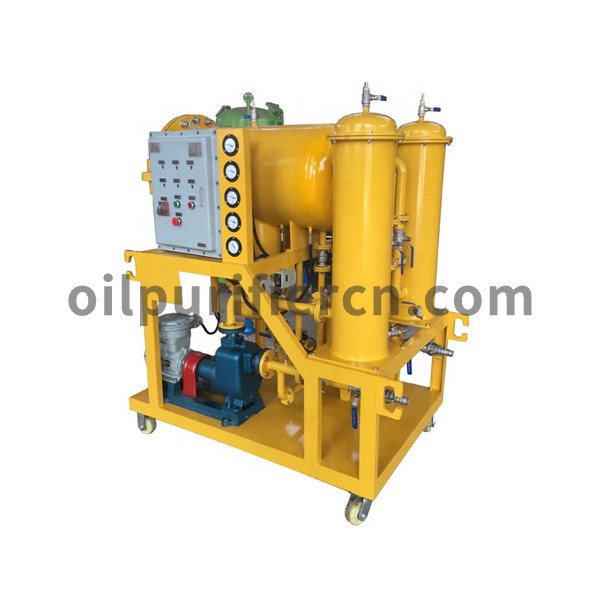
If the diesel contains dissolved oxidation products, severe aging components or a large amount of gum that cannot be separated mechanically, filtration alone is unlikely to provide a reliable solution. Depending on the fuel composition and the intended reuse, chemical treatment, adsorption, blending under controlled conditions or distillation may need to be evaluated by a qualified fuel-processing professional.
Before purchasing diesel filtration equipment, provide the supplier with the fuel type, contamination description, water condition, estimated gum or sludge content, required flow rate and the intended use of the treated fuel. Ask whether the proposed machine performs only particle filtration or also includes water separation, heating, vacuum treatment or other purification stages.
The treated diesel should be verified against the applicable fuel specification and equipment requirements. A filtration machine can improve cleanliness and remove suspended gum deposits, but it should not be described as a complete solution for dissolved gum, severely oxidized fuel or fuel that fails quality testing for other reasons.
Address:No.66 Kecheng Road,Jiulongpo District, Chongqing, China
Phone:0086 13983031725
Whatsapp:0086 13983031725
Email:oilpurification@kaiqiancq.com