You Are Here: Home > NEWS > Oil Purifier Technology
Writer: Kaiqian Oil Purifier Release time:2026-11-10 14:17 Clicks:
Yes. A vacuum oil purifier can remove water from many types of industrial oil when the equipment configuration and operating conditions match the oil contamination. Its vacuum dehydration system separates free water, part of the emulsified water and dissolved moisture, while the filtration section removes suspended particles. However, a standard filter alone cannot remove water dissolved in the oil.
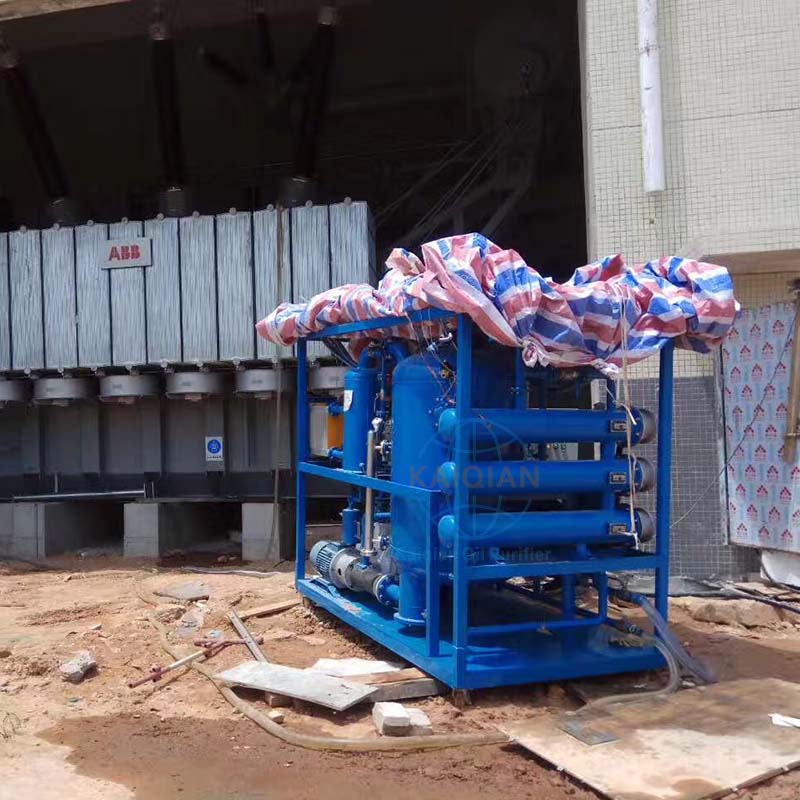
During treatment, contaminated oil is usually heated within a controlled range and distributed into a vacuum chamber or evaporation system. The reduced pressure helps water vaporize at a lower temperature, and the vacuum system removes the vapor from the oil. The oil then passes through filter stages before being discharged.
This process is different from simple oil filtration. Filtration mainly captures solid particles, such as dust, metal debris and carbon deposits. Vacuum dehydration focuses on water and, depending on the machine design, may also remove some dissolved gases from insulating oil.
Free water: Usually the easiest type to separate because it exists as visible droplets or a separate water layer.
Emulsified water: Can be more difficult because water is dispersed into fine droplets and mixed with the oil. Treatment performance depends on oil properties and operating conditions.
Dissolved water: Requires effective vacuum dehydration and sufficient contact area or evaporation space. A conventional cartridge filter cannot remove it.
Good dehydration results depend on the oil type, viscosity, initial moisture level, water form, treatment temperature, vacuum condition, processing flow and equipment sealing. Air leakage, an unstable vacuum, excessive flow or unsuitable heating can reduce the actual dehydration effect.
If water is strongly emulsified, the oil has degraded severely, or the contamination load is high, one treatment cycle may not achieve the required result. In such cases, the operator should check the oil condition and machine parameters instead of judging performance only by the oil’s appearance.
For oil containing only solid particles, a filtration machine may be sufficient. For transformer oil, hydraulic oil, turbine oil or lubricating oil containing moisture, select a vacuum oil purifier with a dehydration function. If the application also requires gas removal, the equipment should include an appropriate degassing stage.
Before purchase or operation, confirm the oil type, treatment objective, expected throughput, moisture condition and required quality standard. After treatment, verify the result through appropriate oil testing. Clear-looking oil does not necessarily mean that its moisture content, dielectric strength or other performance indicators have reached the required level.
Address:No.66 Kecheng Road,Jiulongpo District, Chongqing, China
Phone:0086 13983031725
Whatsapp:0086 13983031725
Email:oilpurification@kaiqiancq.com