You Are Here: Home > NEWS > Oil Purifier Technology
Writer: Kaiqian Oil Purifier Release time:2026-11-13 15:01 Clicks:
When a vacuum oil purifier cannot reach the required vacuum level, the most common causes are air leakage, an abnormal vacuum pump, blocked or incorrectly adjusted valves, excessive water vapor, or unsuitable operating conditions. The correct approach is to check the vacuum system step by step rather than immediately replacing the pump.
Air may enter through the vacuum chamber cover, inspection window, flange gasket, pipe joint, drain valve, sampling valve or damaged hose. A small leak can prevent the vacuum from becoming stable, especially when the equipment has been moved, opened for maintenance or operated for a long time.
Check whether the sealing gasket is aged, deformed, dirty or incorrectly installed. Tighten connections where appropriate, but do not force bolts excessively, because an unevenly compressed gasket may continue to leak. If the vacuum level changes significantly after the oil inlet and outlet valves are closed, the equipment should be inspected for leakage.
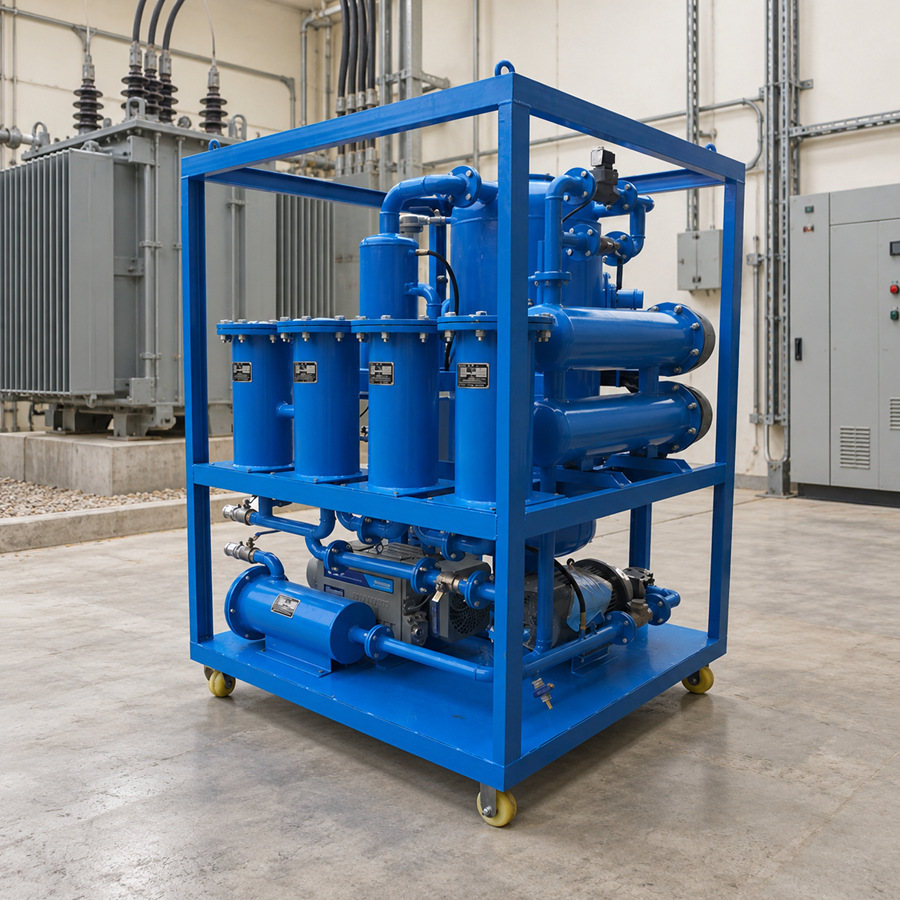
For an oil-sealed vacuum pump, contaminated, emulsified or insufficient pump oil can reduce pumping performance. Check the oil level, color and condition according to the pump manual, and replace the oil when it contains water or heavy contamination. A worn pump, damaged internal parts, blocked exhaust path or motor rotation problem may also cause low vacuum.
Do not judge the pump only by whether it is running. A pump can make normal operating noise while its ultimate vacuum and pumping capacity have already declined. If the vacuum remains poor after the system is isolated from the oil circuit, the pump and its connections need further inspection.
A partially closed valve, incorrectly connected pipeline, collapsed hose or blocked gas filter can restrict gas removal. Confirm that the vacuum valve is fully open in the correct direction and that the pipeline is connected according to the equipment diagram. If a gas-liquid separator, condenser or filter is filled with oil or sludge, its resistance may also increase.
Oil containing a large amount of free water can produce heavy vapor during heating and vacuum treatment. The vacuum pump may then struggle to remove the vapor, causing the vacuum level to rise slowly or fluctuate. Excessive oil flow, unsuitable heating, high air content or strong foaming can create a similar effect.
Reduce the feed rate if permitted by the operating instructions, check the heating and liquid-level controls, and inspect the condenser or water collection system. Vacuum dehydration removes water and some gases under suitable conditions, but it does not solve every type of oil deterioration or contamination.
Confirm that the vacuum gauge is working and that its connection is not blocked or leaking.
Stop or isolate the oil feed when necessary, then check the vacuum chamber, valves, flanges, hoses and drain points for air leakage.
Inspect the vacuum pump oil level and condition, motor rotation, exhaust path and maintenance status.
Check the condenser, gas-water separator, filters and pipelines for blockage, oil accumulation or incorrect valve position.
Review the oil temperature, feed rate, oil level and foaming condition against the machine manual.
After correction, restart the machine under controlled conditions and observe whether the vacuum becomes stable.
Do not adjust the vacuum valve, heating temperature or feed rate beyond the equipment design range simply to obtain a lower reading. Excessive heating or unstable vacuum may increase oil oxidation, foaming or vapor carryover. If the vacuum remains abnormal after leak and operating-condition checks, stop continuous operation and ask qualified maintenance personnel to test the pump, gauge and vacuum chamber.
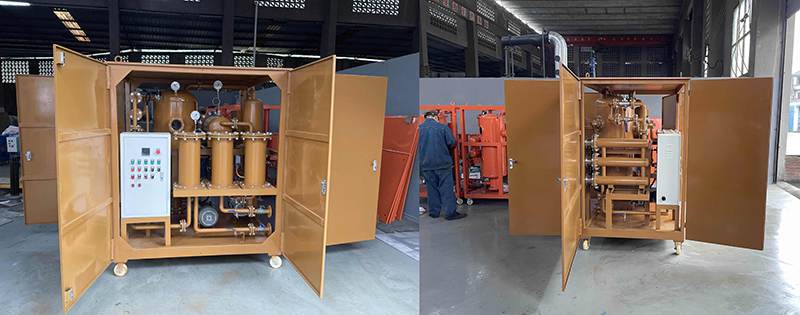
A stable vacuum reading alone does not prove that the oil has reached the required quality. After treatment, verify moisture, gas content, particle cleanliness and other indicators according to the oil type and application, especially for transformer oil, turbine oil and other critical industrial oils.
Address:No.66 Kecheng Road,Jiulongpo District, Chongqing, China
Phone:0086 13983031725
Whatsapp:0086 13983031725
Email:oilpurification@kaiqiancq.com