You Are Here: Home > NEWS > Oil Purifier Technology
Writer: Kaiqian Oil Purifier Release time:2026-11-16 10:06 Clicks:
Selecting a turbine oil purifier should begin with the condition of the oil and the intended treatment result, not with a machine model or a single rated flow figure. Turbine oil may contain suspended particles, free water, emulsified water, dissolved water, air, oxidation products and varnish-related deposits. A suitable purifier must match the actual contamination mechanism and the required reuse condition.
For routine maintenance, the main objective is usually to reduce solid particles, free or emulsified water and entrained air so that the oil can continue serving in a turbine lubrication or hydraulic control system. This is different from re-refining degraded oil into base oil. Filtration and vacuum dehydration can improve cleanliness and moisture condition, but they cannot restore severely oxidized additives or convert all dissolved degradation products into new lubricant.
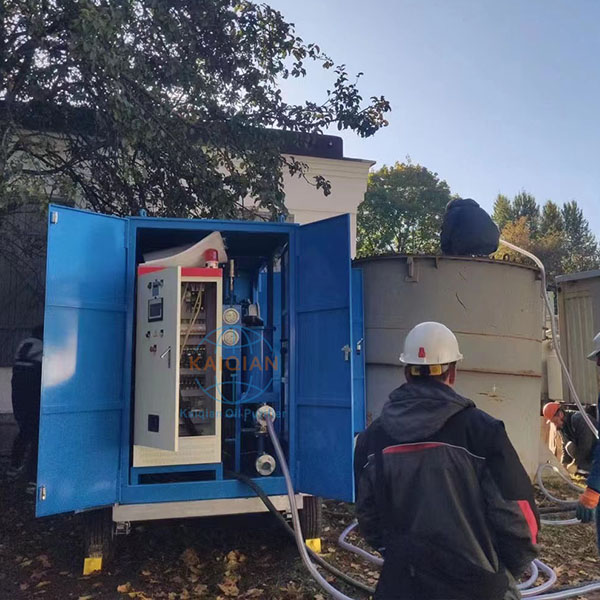
Before comparing equipment parameters, confirm the oil type, viscosity grade, service history and whether the oil is mineral-based or synthetic. Turbine oil used for steam turbines, gas turbines, hydraulic governing systems or circulating lubrication may have different additive packages and operating temperatures. The purifier materials, heating conditions and treatment method should be compatible with the oil and should not create unnecessary thermal stress.
The treatment objective should be stated in measurable terms. For example, the project may require removal of free water, improvement of particle cleanliness, reduction of dissolved moisture, removal of air, or recovery of oil for continued service. If the oil has a strong odor, abnormal acidity, severe sludge, high varnish tendency or major additive depletion, a conventional oil purifier may provide only partial improvement and further laboratory evaluation may be necessary.

| Parameter | Why it matters | Information to confirm |
|---|---|---|
| Rated treatment flow | Determines the theoretical processing capacity and circulation time | Rated flow condition, oil viscosity, temperature and actual throughput |
| Filtration accuracy | Influences removal of suspended particles and filter loading frequency | Filter rating, filtration stages, element material and pressure protection |
| Dehydration method | Determines the ability to remove free, emulsified or dissolved water | Vacuum level, oil temperature range, separation design and sealing condition |
| Heating capacity | Reduces viscosity and supports water separation under suitable conditions | Oil temperature limits, heater control and protection against overheating |
| Oil compatibility | Prevents damage to seals, additives and sensitive components | Oil composition, seal materials, maximum temperature and residence time |
| Control and protection | Supports stable operation and protects the pump, heater and vacuum system | Pressure, level, temperature, overload, vacuum and alarm functions |
Rated flow is one of the most visible selection parameters, but it should not be treated as guaranteed performance under every condition. A nominal flow value is usually associated with specified oil viscosity, temperature, filter condition and system resistance. Actual throughput may be lower when the oil is cold, highly contaminated, more viscous than the reference oil or heavily loaded with water.
The required capacity should be related to the oil inventory and the maintenance schedule. If the purifier is used for periodic offline circulation, the question is how quickly the complete oil volume can pass through the treatment system while maintaining adequate residence time for dehydration and filtration. A larger pump does not automatically mean better purification if the vacuum chamber, heating system, filter area or separation section cannot match the flow.
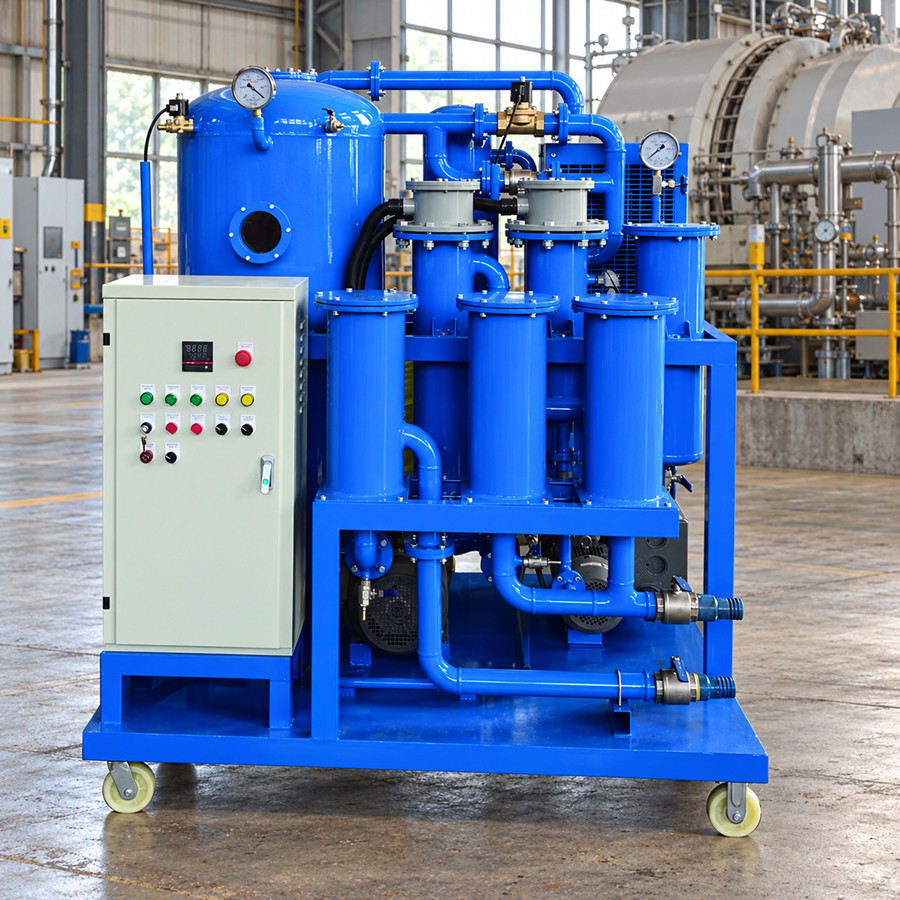
When requesting a quotation, ask the supplier to state the test conditions behind the flow rating. Important items include oil viscosity, inlet temperature, filtration stage condition, operating vacuum and whether the figure represents pump displacement or actual treated-oil flow. This distinction helps prevent a mismatch between catalogue capacity and field performance.
Particle removal depends on more than the nominal micron rating. The filter element structure, effective filter area, dirt-holding capacity, bypass arrangement and pressure monitoring all affect stable operation. A fine filter may improve cleanliness, but if the incoming oil contains sludge or large quantities of solids, it can clog quickly and cause flow loss or excessive differential pressure.
A practical configuration often uses staged filtration, with a coarser stage protecting the pump and downstream equipment before finer filtration. The correct rating depends on the required cleanliness target and the tolerance of the turbine oil system. Filter selection should also consider element replacement, cleaning feasibility, availability of spare elements and the risk of secondary contamination during maintenance.
If the main problem is water, the purifier must be selected according to the form of water present. Free water is generally easier to separate than emulsified or dissolved water. Vacuum dehydration can remove moisture and some entrained gases under suitable temperature, vacuum and flow conditions, but poor sealing, insufficient heating, excessive flow or unstable vacuum can significantly reduce performance.
The vacuum pump and separation chamber should be evaluated as a complete system rather than by vacuum value alone. A deep vacuum reading at no-load condition does not prove that the machine will maintain the required operating vacuum while processing wet oil. Confirm the working vacuum range, vacuum stability, demisting or oil-carryover control, condensate discharge arrangement and protection against vacuum pump contamination.
Heating is normally used to reduce viscosity and improve evaporation or separation. However, the operating temperature must remain compatible with the turbine oil and its additives. Excessive heating or unnecessarily long residence time may accelerate oxidation or alter oil properties. The purifier should therefore provide controlled heating, temperature monitoring and protective shutdown rather than relying on an uncontrolled high-temperature setting.
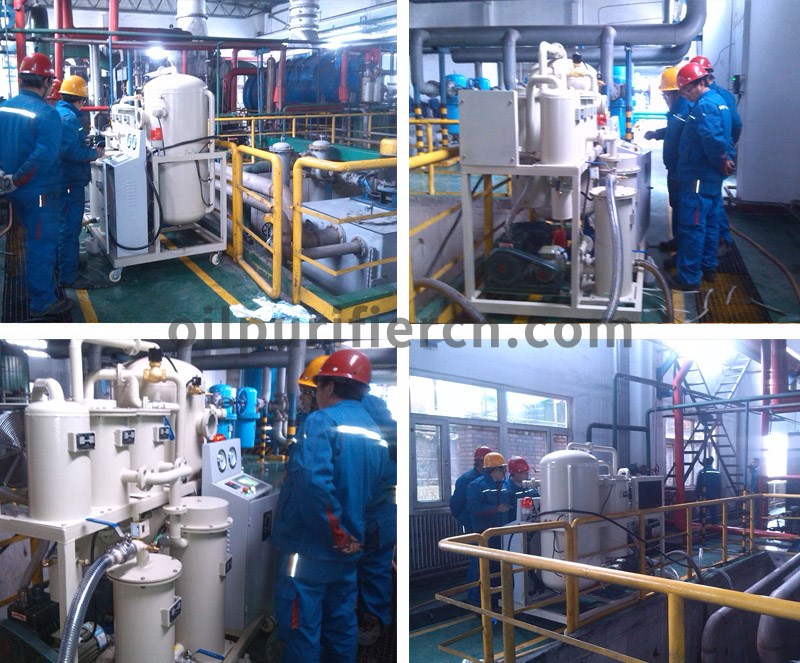
A turbine oil purifier should be able to operate safely with the expected oil temperature, ambient conditions and hose or pipeline resistance. Confirm the motor power, pump type, electrical supply, connection sizes, noise and installation requirements before purchase. These details affect whether the equipment can be integrated into the maintenance area or connected to the turbine oil system without unsafe modifications.
The control panel should provide the functions needed for the actual process, such as pump start and stop, heater control, vacuum control, level monitoring and alarm handling. Useful protections may include high-temperature shutdown, high differential pressure, low liquid level, motor overload, abnormal vacuum and leakage detection. The exact functions vary by model, so they should be verified against the supplier's technical documents rather than assumed from the term “PLC control.”
Visual clarity alone is not sufficient to confirm that turbine oil has been restored to an acceptable condition. The verification plan should correspond to the treatment objective and may include water content, particle cleanliness, viscosity, acid number, oxidation condition and other oil-property tests selected by the equipment manager or laboratory.
Sampling is part of the result. Samples should be taken from a representative point after sufficient circulation and placed in clean, suitable containers. If the sample is collected from a dirty hose, tank bottom or unflushed sampling port, the test may reflect sampling contamination rather than purifier performance.
In summary, the most important turbine oil purifier selection parameters are not isolated numbers. The oil type, contamination form, required quality, actual viscosity, treatment temperature, filtration area, vacuum performance and operating protections must work together. A technically sound selection compares the complete process under stated conditions and confirms the result through appropriate oil testing before the equipment is accepted for routine use.
Address:No.66 Kecheng Road,Jiulongpo District, Chongqing, China
Phone:0086 13983031725
Whatsapp:0086 13983031725
Email:oilpurification@kaiqiancq.com