You Are Here: Home > NEWS > Oil Purifier Technology
Writer: Kaiqian Oil Purifier Release time:2026-11-16 09:58 Clicks:
The environmental approval process for waste engine oil refining is determined by more than the selection of an oil distillation plant. The project must first clarify the source and legal classification of the feedstock, the intended treatment route, the final product, pollutant control measures and the site’s planning conditions. A plant designed to purify oil for internal reuse may face different requirements from a facility that receives hazardous waste from third parties and produces recycled base oil or fuel oil.
Because approval requirements may vary by country, province, municipality and project scale, the following process should be treated as a technical planning framework. Before investment, the project owner should confirm the current requirements with the local ecological and environmental authority, planning department and other responsible agencies.
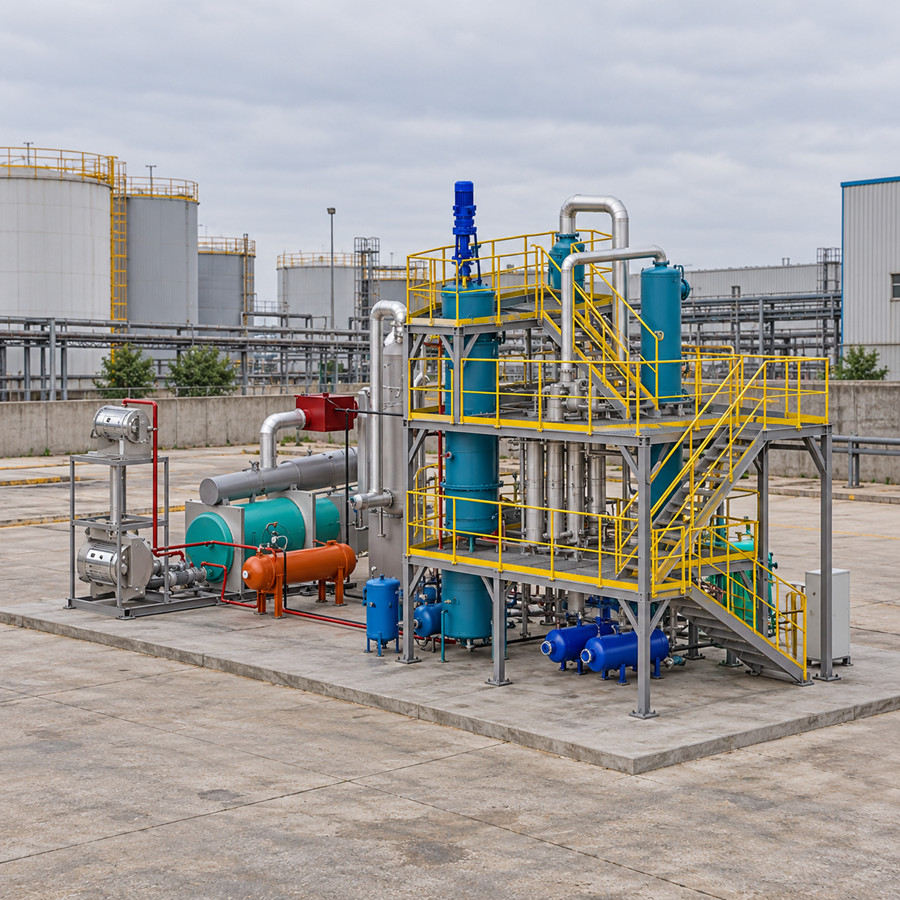
The first step is to describe the project accurately rather than simply calling it a “waste oil recycling plant.” The application should identify the waste oil sources, annual treatment capacity, storage method, main process, auxiliary materials, energy source, emissions and the intended use of the treated product.
Three business models should be distinguished. Oil purification for the generator’s own equipment is mainly concerned with oil quality, safe operation and pollution prevention. Waste engine oil recycling that accepts material from outside parties also involves waste transfer, storage and traceability. A project using distillation, separation or further upgrading to produce a marketable oil product must additionally demonstrate that the process and product quality are appropriate for the claimed end use.
Waste engine oil is commonly managed as hazardous waste in many jurisdictions, and in China waste mineral oils are generally associated with the HW08 category under the applicable hazardous waste catalogue. However, the final classification should be confirmed according to the current catalogue, the actual source, contamination characteristics and local regulatory interpretation. Different materials such as used lubricating oil, oily sludge, water-containing emulsions and contaminated containers may not have identical management requirements.
The project owner should prepare information about the waste generators, source industries, estimated composition, water and sediment content, possible chemical contamination and expected monthly supply. A stable and traceable feedstock source is important because a process approved for relatively clean used engine oil may not be suitable for sludge, solvent-contaminated oil or mixed industrial waste.
Site selection should be completed before detailed equipment procurement. The proposed location must be checked against industrial land-use planning, environmental zoning, access for hazardous waste transport, nearby residential areas, water protection requirements, flood risk and the availability of fire and emergency services.
A technically feasible process may still be difficult to approve if the site is not permitted for hazardous waste treatment or if the surrounding environment cannot accommodate the project’s risks. The owner should also confirm whether the site has suitable impervious flooring, covered storage, spill containment, stormwater separation, wastewater collection and emergency access.
The environmental impact assessment, or EIA, is a central part of the approval process. The required EIA document depends on the applicable project classification, treatment capacity, process route, pollution potential and local rules. Some projects may require a more detailed assessment, while others may follow a simplified reporting or filing procedure.
The EIA should not describe only the main distillation vessel. It normally needs to evaluate feedstock storage, unloading, pretreatment, heating, vacuum operation, condensation, non-condensable gas handling, product storage, wastewater, solid residues, waste filters, noise, odor, accidental leaks and fire-related environmental risks. The assessment should also explain how off-specification oil and process residues will be collected and managed.
Waste oil refining can generate several different pollution streams. Volatile organic compounds and odor may arise during unloading, heating, vacuum operation and product storage. Wastewater may contain oil, suspended solids and other contaminants. Bottom residues, filter elements, sludge and contaminated absorbents may require hazardous waste management.
Pollution control equipment should therefore be matched to the process rather than selected from a standard list. Possible measures include closed transfer, vapor collection, condensation, suitable exhaust treatment, oil-water separation, secondary containment and dedicated hazardous waste storage. A vacuum distillation system can reduce the operating temperature in suitable conditions, but vacuum operation alone does not prove that all emissions are controlled or that the project meets discharge requirements.
Where the project receives, stores or treats hazardous waste from other parties, the operator may need a hazardous waste business license or an equivalent authorization. The exact scope normally depends on the waste categories, approved capacity, treatment method and permitted operating conditions. The operator should not accept waste outside the approved category simply because it appears visually similar to used engine oil.
The project may also need a pollutant discharge permit or other discharge-related registration. This process generally requires information about emission points, wastewater outlets, control facilities, monitoring arrangements and operating limits. The permit conditions should be consistent with the EIA and the actual plant configuration; changing the process or adding a discharge outlet after approval may require a formal modification.
Temporary storage is a major approval and inspection point. The storage area should be covered, clearly marked, protected against leakage and rainwater entry, and equipped with compatible containers, spill response materials and collection facilities. Different waste streams should be identified and segregated where mixing could create treatment or compliance problems.
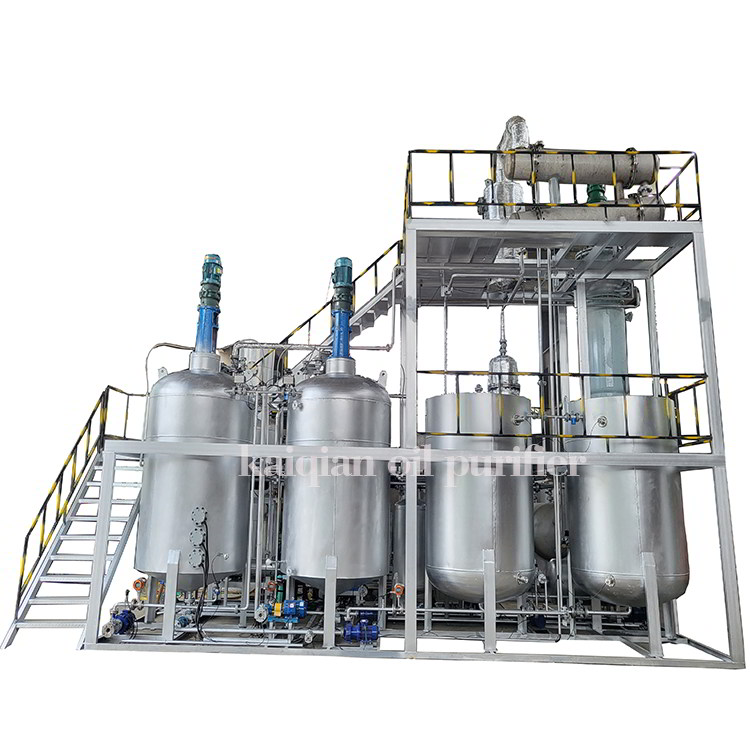
Records should normally cover the source, quantity, date received, storage location, treatment batch, residue generation and final destination. Where electronic manifests or transfer documentation are required, the operator must use the applicable system. Good records are not only administrative evidence; they help demonstrate that the approved feedstock, capacity and treatment route are being followed.
After the project is approved and constructed, the owner should commission the plant under controlled conditions. Commissioning should verify leak tightness, temperature and pressure control, vacuum stability, condensation performance, storage safety, emergency shutdown functions and the operation of pollution control equipment.
Environmental acceptance after completion should be based on the approved project documents and the applicable local procedure. Monitoring may involve organized emissions, wastewater, noise, odor or other parameters specified for the project. Sampling should be performed under representative operating conditions, and the results should be compared with the applicable requirements rather than judged by oil color or transparency.
Distillation can separate part of the water, light fractions and heavier residues from used engine oil, but the output is not automatically qualified diesel, lubricating oil or base oil. Product classification depends on the process route, contamination control, further treatment, quality testing and the intended market or application.
For example, an oil fraction suitable for a defined industrial fuel application should not be advertised as road diesel without confirming the relevant fuel specifications and legal requirements. Similarly, recycled base oil is an intermediate or refined product category and should not be equated with finished lubricating oil unless it has undergone the required formulation and quality verification.
Waste oil sources, annual quantity and expected composition
Waste classification and transfer documentation requirements
Site land-use status, environmental zoning and surrounding sensitivity
Process flow diagram, material balance and energy consumption
Storage capacity, secondary containment and emergency response plan
Air emission, wastewater, solid residue and odor control measures
Intended product name, end use and quality verification plan
Planned operating schedule, staffing and maintenance arrangements
The most reliable approval strategy is to complete regulatory and process due diligence before purchasing major equipment. A waste oil refining project should be evaluated as an integrated hazardous waste treatment and pollution control system, not merely as a distillation machine installation. When the feedstock, site, process, emissions, residues and product claims are consistent, the environmental approval process becomes more predictable and the risk of later redesign is significantly reduced.
Address:No.66 Kecheng Road,Jiulongpo District, Chongqing, China
Phone:0086 13983031725
Whatsapp:0086 13983031725
Email:oilpurification@kaiqiancq.com