You Are Here: Home > NEWS > Oil Purifier Technology
Writer: Kaiqian Oil Purifier Release time:2026-11-23 10:06 Clicks:
The cost of an oil filtration machine cannot be determined responsibly from the equipment name alone. A basic filter for removing suspended particles may have a very different price from a vacuum oil purifier designed to remove water, gases and fine contaminants from transformer or lubricating oil. The final quotation depends on the oil type, contamination condition, required treatment result, processing capacity, automation level and supporting configuration.
For this reason, a low quoted price is not necessarily a lower total cost, and a larger machine is not automatically the correct choice. Before comparing suppliers, the buyer should define whether the objective is simple filtration, dehydration and degassing, oil purification for reuse, or waste oil distillation and recycling. These are different technical processes and should not be evaluated by the same price standard.
Transformer oil, turbine oil, hydraulic oil, lubricating oil and diesel have different viscosity, moisture behavior and contamination characteristics. A machine intended for transformer oil treatment may require a vacuum dehydration and degassing system, while a hydraulic oil application may focus mainly on particle removal and water separation. The material compatibility of seals, hoses, pumps, heaters and filter elements must also match the oil being processed.
Waste oil is a separate category. Used engine oil or mixed waste lubricants may contain water, fuel, carbon residue, additives, sludge and oxidation products. A standard oil filter can remove part of the solid contamination, but it cannot generally restore heavily degraded oil to a base-oil specification. If the project involves producing recycled base oil, the process may require heating, vacuum distillation, fraction separation and residue handling rather than filtration alone.
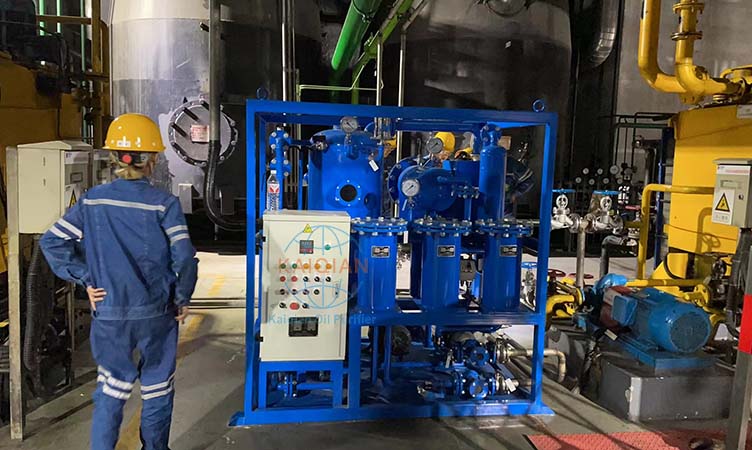
The required result has a direct effect on equipment cost. If the purpose is to remove visible particles before reuse, a pressure filtration unit may be sufficient. If the oil contains free water or dissolved moisture, a vacuum oil purifier may be more suitable. If dissolved gases, fine water and high cleanliness are important, the system may need multiple filtration stages, controlled heating and a properly designed vacuum chamber.
Filtration equipment has technical limits. It can capture particles and, when correctly configured, separate some free or emulsified water. It cannot remove every dissolved contaminant, reverse oil oxidation, eliminate all additives or convert severely degraded oil into qualified new lubricant. A quotation should therefore be based on the actual treatment target rather than on a general claim such as “complete purification.”
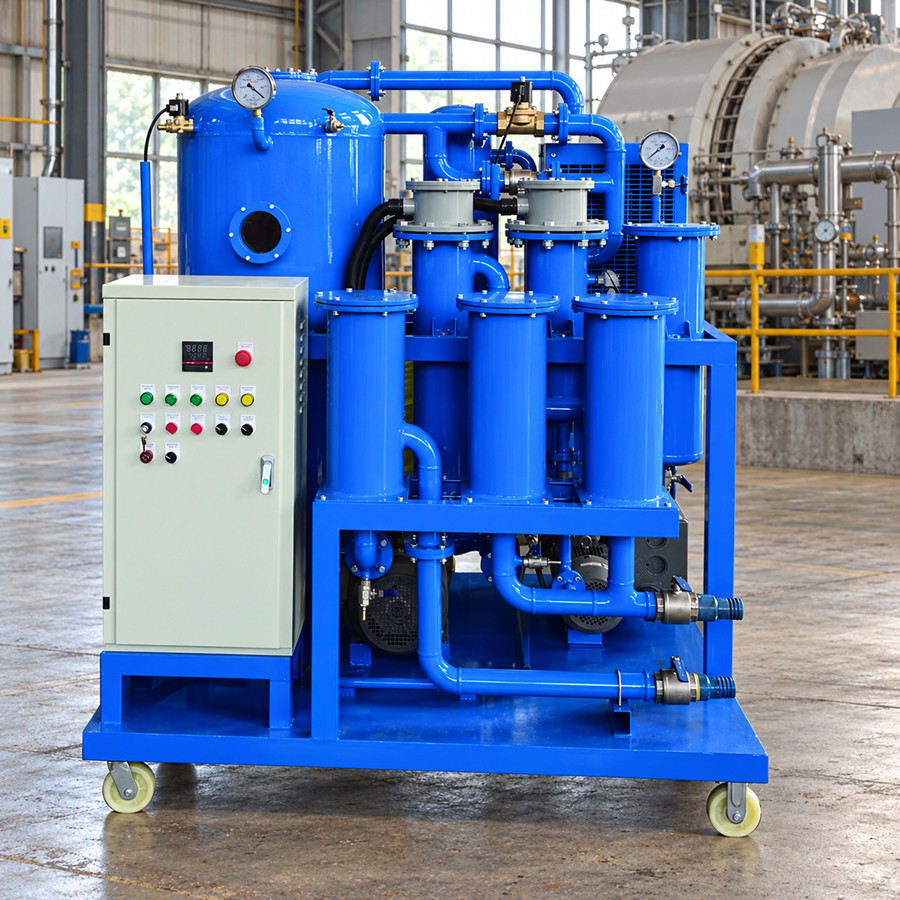
Rated flow is one of the most visible parameters, but it is not the only one that determines practical performance. A machine rated for a certain throughput under specified oil temperature, viscosity and contamination conditions may process less in an actual plant if the oil is cold, highly viscous, heavily emulsified or frequently clogging the filters. The buyer should ask for the operating conditions behind the stated capacity.
Common cost factors include the number and precision of filtration stages, filter housing design, pump type, heating capacity, vacuum pump and vacuum chamber arrangement, oil-water separation method, electrical control system, online instruments and the required material grade. Automatic control, alarm functions and interlocks can increase the initial investment but may reduce operating errors and improve repeatability in continuous service.
For transformer oil or other electrical insulating oils, dehydration and degassing performance may be more important than nominal flow. For turbine or hydraulic oil, particle cleanliness, free-water removal and stable circulation may receive greater attention. The correct configuration is therefore determined by the oil’s failure risks and the plant’s operating practice, not by the machine size alone.
| Equipment category | Main function | Cost logic | Important limitation |
|---|---|---|---|
| Basic pressure filtration unit | Removal of suspended particles and some sludge | Usually the simplest configuration, with cost influenced by flow rate and filter precision | Limited ability to remove dissolved water, gases and oxidation products |
| Vacuum oil purifier | Filtration combined with water and gas removal under suitable conditions | Higher cost due to vacuum, heating, separation and control systems | Performance depends on sealing, vacuum level, oil temperature, viscosity and water condition |
| High-cleanliness oil treatment system | Fine filtration and controlled treatment for demanding industrial applications | Cost increases with filtration accuracy, instrumentation and process stability requirements | Does not automatically correct chemically degraded oil |
| Waste oil distillation or recycling plant | Separation and recovery of useful fractions from selected waste oils | Higher investment because of heating, vacuum distillation, condensation and residue systems | Distillate is not automatically qualified diesel, lubricant or base oil without further testing and treatment |
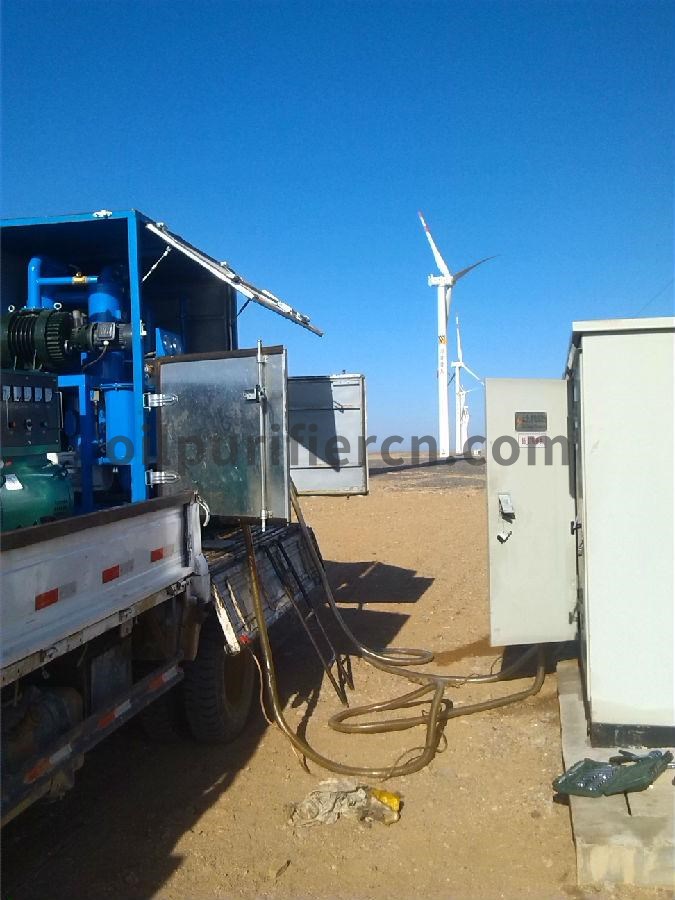
This comparison is only a process-level guide. Actual prices vary with capacity, layout, electrical standard, material selection, automation requirements, auxiliary tanks and the intended installation environment. A small machine with specialized vacuum or control requirements may cost more than a larger but simpler filtration unit.
Different suppliers may use the same terms while offering different configurations. “Oil purifier” may refer to a simple filter, a vacuum dehydration machine or a more complete treatment line. The quotation should identify the filtration stages, pump and vacuum arrangement, heating method, control scope, filter element type, design flow and applicable oil conditions.
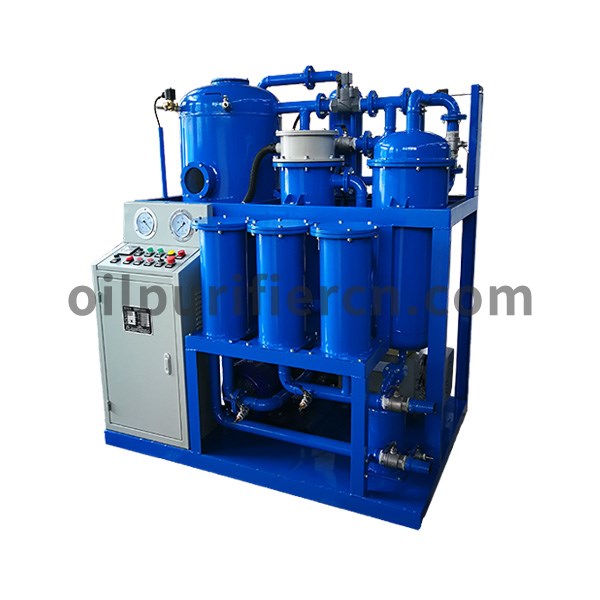
It is also necessary to distinguish included equipment from optional items. Feed and discharge hoses, storage tanks, spare filter elements, oil-water drains, online moisture instruments, installation materials and commissioning support may or may not be included. Comparing only the machine body price can conceal additional costs during installation and operation.
Oil type, brand or application, and whether different oils will be mixed.
Initial contamination, including visible particles, sludge, free water, emulsified water or abnormal odor.
Required treatment result and any internal cleanliness or moisture criteria.
Required processing capacity, operating hours and expected batch or continuous operation.
Oil temperature, viscosity range and ambient operating conditions.
Available electrical supply, installation space and required level of automation.
Whether the project is for reuse purification, insulating-oil treatment, or waste-oil recycling.
If the contamination condition is uncertain, a representative oil sample and laboratory analysis can prevent an unsuitable configuration. The relevant tests depend on the application; for example, moisture, particle contamination, viscosity, acid value, flash point or dielectric performance may be more useful than appearance alone. Clear test conditions also make any performance discussion more meaningful.
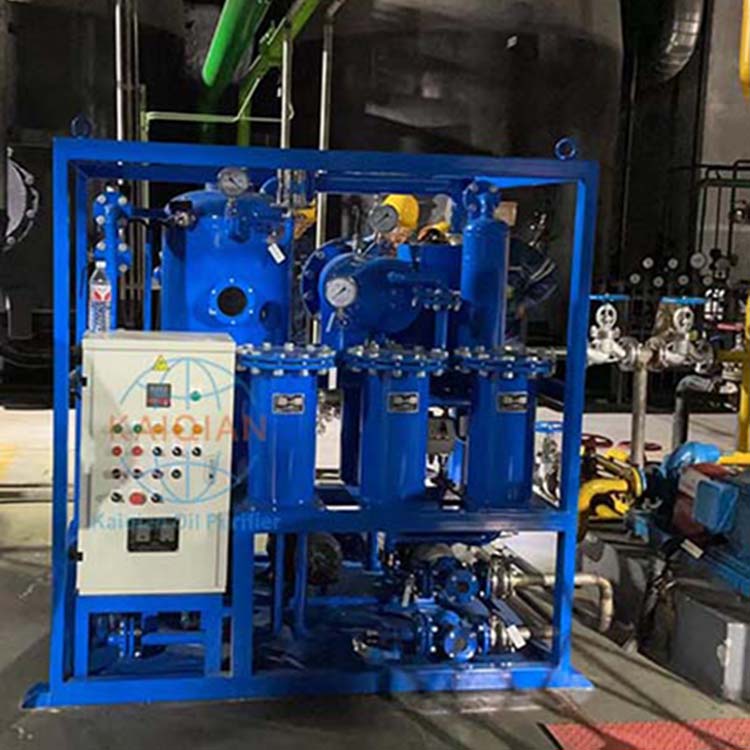
The purchase price is only one part of the project cost. Buyers should also consider filter-element consumption, electricity for heating and vacuum operation, pump maintenance, waste-water or sludge disposal, operator workload and the consequences of insufficient treatment. A lower-cost machine may be economical for occasional particle removal but unsuitable for oil containing high moisture or severe oxidation products.
The most reliable selection method is to match the process to the actual oil problem, then compare quotations on the same technical basis. Ask each supplier to state the applicable oil type, design conditions, guaranteed or expected treatment scope, exclusions and quality-verification method. This approach produces a more useful cost comparison than asking only, “How much is one oil filtration machine?”
Address:No.66 Kecheng Road,Jiulongpo District, Chongqing, China
Phone:0086 13983031725
Whatsapp:0086 13983031725
Email:oilpurification@kaiqiancq.com